
Care directed by Shehram Majid, MD
Insomnia Treatment in Sugar Land, TX
Insomnia treatment in Sugar Land that looks for the reason you cannot sleep, not just a prescription to mask it. At CIP Psychiatry, every care plan is directed by a board-certified psychiatrist who treats the cause of your sleep problem, whether it is anxiety, depression, a disrupted body clock, or a primary sleep disorder.
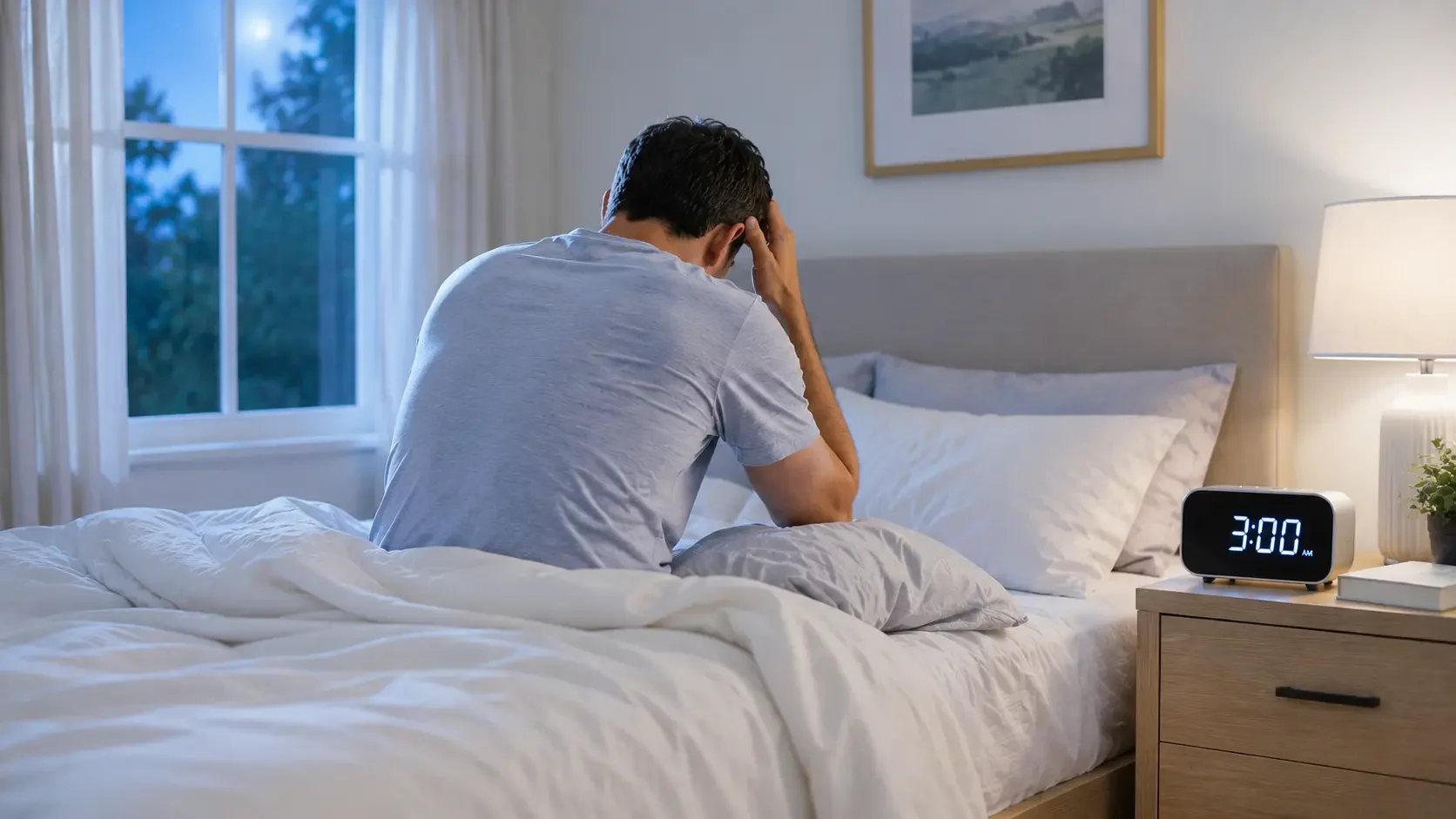
A Better Approach
A Sugar Land Insomnia Treatment Center That Treats the Cause
Sleep is one of the strongest regulators of mental health. When it breaks down, mood, focus, energy, and physical health follow. Too often insomnia is handled with a quick sleep aid instead of a real look at why sleep is disrupted. As an insomnia treatment center in Sugar Land, we do the opposite. We evaluate what is keeping you awake and build a plan around that.
The people we see with insomnia usually fall into three groups. Some have primary insomnia, a standalone disorder where the sleep and wake system is dysregulated and worry about sleep makes it worse. Some have insomnia driven by another condition such as depression, anxiety, PTSD, bipolar disorder, or ADHD. Others have an undiagnosed medical issue feeding the problem.
The treatment for each is different, so getting the diagnosis right is the first step.
Who this helps
Adults in Sugar Land and across Texas who cannot fall asleep, cannot stay asleep, or wake too early, and who want a board-certified psychiatrist to find the cause rather than prescribe a sleep aid by default.

Our Approach
Our treatment approach to Insomnia
Find the root cause
We evaluate for psychiatric conditions, medication effects, substance use including caffeine and alcohol, sleep apnea, restless legs syndrome, body clock disruption, and daily habits. Treating insomnia without knowing the driver often leads to long-term reliance on sleep medication with little real gain in sleep quality.
Behavioral treatment first
Cognitive behavioral therapy for insomnia, known as CBT-I, is the first-line treatment with the strongest research behind it. It targets the habits and thoughts that keep insomnia going, such as spending too long in bed, an irregular schedule, clock-watching, and anxious thinking about sleep. We build CBT-I principles into appointments and refer for more intensive behavioral therapy when it is needed.
Medication when it is the right tool
Medication is often an important tool, and we approach it carefully. We generally avoid long-term use of sedative-hypnotics for chronic insomnia because of tolerance, dependence, and rebound risks. When medication helps, we choose from non-habit-forming drug classes matched to your clinical picture. When clinically appropriate, we work toward reducing or discontinuing medication.
Sleep habits as the foundation
Consistent wake times, less screen exposure before bed, a better sleep environment, and smart use of daylight are not cure-alls, but they create the conditions other treatments need to work. We talk through these practically, not as a lecture.
Comparison
CBT-I vs Sleep Medication for Insomnia
Both behavioral treatment and medication can help insomnia, but they work differently. This comparison shows why we lead with cognitive behavioral therapy for insomnia and use medication as a targeted tool.
| Factor | CBT-I (Behavioral) | Sleep Medication |
|---|---|---|
| Speed of effect | Works over 2 to 4 weeks | Can work the first night |
| Durability | Benefits tend to last after treatment ends | Benefits often fade once stopped |
| Dependence risk | None | Some classes carry tolerance and dependence risk |
| Best used for | Chronic insomnia and long-term results | Short-term or situational sleep trouble |
| Guideline status | Recommended first-line treatment | Considered when CBT-I alone is not enough |
Insomnia Severity Index
Answer 7 questions about how your sleep has been over the last 2 weeks. Completely confidential. Results in under 3 minutes.
Our care team typically sees new patients within 1 to 2 weeks. Appointments may be with Dr. Majid or a nurse practitioner working under his supervision.
ISI Score Interpretation
When Does Insomnia Need Treatment?
Insomnia needs treatment when sleep trouble happens at least three nights a week for three months or longer, despite enough time to sleep, and causes daytime problems. Those problems include fatigue, poor focus, low mood, reduced motivation, or trouble functioning at work or home.
Trouble sleeping now and then is normal. Insomnia as a clinical condition is persistent and disruptive. Common patterns include trouble falling asleep, called sleep onset insomnia, waking repeatedly through the night, called sleep maintenance insomnia, waking too early and being unable to return to sleep, or a mix of all three. Each pattern can point to a different underlying cause.
Sleep onset insomnia
Trouble falling asleep at the start of the night, often tied to anxiety or a delayed body clock.
Chronic insomnia
Sleep trouble at least three nights a week for three months or more, which is when an evaluation matters most.
The Main Types of Insomnia
Sleep maintenance insomnia
Waking repeatedly through the night and struggling to fall back asleep, common with depression, pain, or sleep apnea.
Early morning awakening
Waking too early and being unable to return to sleep, which is frequently linked to depression.
Acute insomnia
Short-term sleep trouble lasting days or weeks, usually triggered by stress or a change in routine.
What Happens at Your First Insomnia Appointment
Understanding Your Care
-
1
We review your sleep history
At your first visit we map your sleep patterns, daily habits, medical history, and any medications, so we can see what is driving the insomnia.
-
2
We screen for underlying causes
We check for anxiety, depression, sleep apnea, restless legs, body clock issues, and substance effects, because the right diagnosis decides the right treatment.
-
3
We build a plan with you
You leave with a clear plan that may include CBT-I principles, sleep habit changes, treatment of an underlying condition, and medication only when it is the right tool.
-
4
We follow up and adjust
Sleep changes take time. We track your progress at follow-up visits and adjust the plan so the gains hold.
What Causes Insomnia?
Insomnia is caused by a mix of psychological, medical, and lifestyle factors. The most common drivers are anxiety, depression, and stress, followed by an irregular sleep schedule, caffeine or alcohol, certain medications, pain, hormonal changes, and other sleep disorders such as sleep apnea or restless legs syndrome.
What Is the First-Line Treatment for Insomnia?
Cognitive behavioral therapy for insomnia, known as CBT-I, is the recommended first-line treatment for chronic insomnia in adults. The American College of Physicians recommends that all adults with chronic insomnia receive CBT-I as the initial treatment, with medication considered only when CBT-I alone is not enough.
Comprehensive Care
Related Conditions We Treat
Insomnia rarely travels alone. When another condition is driving your sleep problem, treating it often resolves the insomnia too. We treat these conditions in Sugar Land and by telehealth across Texas.
Mood stabilizers
Mood disorder evaluation in Sugar Land for mood swings and emotional instability that disrupt sleep and daily functioning.
Depression
Depression treatment in Sugar Land for adults dealing with early morning waking, low energy, and disrupted sleep.
Payment Options
Insurance Plans We Accept
CIP Psychiatry is in network with seven insurance plans, so most patients pay only their standard copay or coinsurance.
In-network coverage
We are a psychiatry practice accepting Ambetter, along with Aetna, Blue Cross Blue Shield, Cigna, UnitedHealthcare through Optum, Oscar Health, and Medicare. If you have insomnia and Cigna in Texas, or any of these plans, your visits are billed directly to your insurer.








Out of Network and Self-Pay Options
If we are not in network with your plan, we offer self-pay rates and can provide a superbill you can submit for out-of-network reimbursement.
Rates are flat by visit length:
$250 for the 50-minute diagnostic intake,
$200 for the 25-minute follow-up.
Cost should never be the reason you wait to get help. Our team verifies your benefits before your first visit so you know what to expect.
Meet Your Sleep Specialist

Dr. Shehram Majid, MD
Board-Certified Psychiatrist
If you have been searching for a sleep doctor in Sugar Land or a sleep specialist who treats insomnia, your care at CIP Psychiatry is directed by Shehram Majid, MD.
Dr. Majid is a board-certified psychiatrist who focuses on the link between sleep and mental health, which is where most chronic insomnia begins. Because so much insomnia is tied to anxiety, depression, PTSD, or a disrupted body clock, a psychiatrist who specializes in sleep can treat the sleep problem and its cause in the same plan, rather than sending you between two providers.
His approach to insomnia is to find the driver first, use behavioral treatment as the foundation, and reserve medication for when it is the right tool.
FREQUENTLY ASKED QUESTIONS
Common Questions About Insomnia
-
You likely have insomnia if you have trouble falling asleep, staying asleep, or waking too early at least three nights a week for three months or more, despite enough time to sleep, and it affects your day. A short screening or an evaluation can confirm it.
-
Dr. Majid is a board-certified psychiatrist in Sugar Land who specializes in sleep and insomnia. Because most chronic insomnia is linked to mental health, a psychiatrist who focuses on sleep can treat the insomnia and any underlying condition together, which is often more effective than treating them separately.
-
Both can treat insomnia. A psychiatrist is the right choice when insomnia is tied to anxiety, depression, PTSD, or another mental health condition, which is common. As a sleep-focused psychiatry practice in Sugar Land, we treat the insomnia and the condition behind it together.
-
Yes. We build cognitive behavioral therapy for insomnia, known as CBT-I, into our appointments in Sugar Land and refer for more intensive CBT-I when it is needed. CBT-I is the first-line treatment with the strongest research behind it.
-
Yes. We provide insomnia treatment by telehealth across Texas, so you can be evaluated and treated from home. In-person visits are available at our Sugar Land office for patients who prefer them.
-
Not by default. We look for the cause of your insomnia first and often treat it without long-term sleep medication. When medication helps, we use non-habit-forming options and work toward the lowest effective use.
-
New patients are typically seen within one to two weeks. Texting (281) 500-8416 is the fastest way to reach us and schedule.
Ready to get started?
Your privacy is important. Our intake form is secure and HIPAA-compliant.
Prefer to speak with someone instead?
Call/Text us at (281) 500-8416 or email us at info@cipclinic.com